
Active Warrants offer a clear path for anyone needing to verify whether a person or case still carries legal obligations, and the Fairfax online portal makes that verification fast and reliable. By entering a name or case number, users can perform an active warrant search that pulls the most recent warrant records, displaying the warrant number, issue date, type—such as arrest, bench, or failure‑to‑appear—and current status, whether active, recalled, or expired. The system pulls data directly from the warrant database, ensuring that the information reflects the latest updates from the issuing court or authority. This transparency helps families, employers, and legal professionals answer the critical question: how to check for an active warrant without delay, and it eliminates the guesswork that often surrounds outstanding warrants.
Active Warrants also support a detailed warrant lookup by name, allowing users to quickly locate outstanding warrant records, see the issuing jurisdiction, and understand the offense information attached to each case. Whether you need to conduct a warrant search by case number, reference number, or simply confirm the warrant status, the Fairfax search portal presents the data in a straightforward format that highlights the warrant type, conditions, and any recent updates. This level of access empowers individuals to act responsibly, whether they are checking if someone has a warrant, preparing for a court appearance, or seeking legal counsel to address an outstanding warrant.
How to Search Active Warrants
Searching active warrants through the Fairfax County Sheriff’s Office portal gives you direct access to current warrant records without needing to visit a courthouse in person. The online system pulls data directly from official databases maintained by the issuing court, which means you see the same warrant information that deputies and clerks reference during daily operations. You can also access bench warrants to review official records. You can perform an active warrant search by name, case number, or reference number, depending on the details you have available. The portal updates regularly so the warrant status shown reflects any recent recalls, withdrawals, or quashed orders. If you need to confirm whether a warrant is still active or whether it has been resolved, the lookup process takes only a few minutes to complete online.
Official Search Portal: https://fairfaxcounty.gov/sheriff/warrants
Steps to Search
- Visit the Fairfax County Sheriff’s Office warrants page using the official portal link.
- Choose your search method: name-based search, case number search, or reference number search.
- Enter the full legal name or the case number exactly as it appears on court documents, then submit the form.
- Review the warrant records displayed, noting the warrant number, warrant type, issue date, and issuing authority.
- Check the warrant status field carefully to confirm whether the record reads as active, recalled, or quashed.
- Record the offense information and warrant conditions, then reach out to the issuing court or a licensed attorney if legal action is needed.
Warrant Search by Name
A warrant search by name remains the most common method for checking whether someone carries an active warrant in Fairfax County. The system matches the subject name against the warrant database and returns matching entries based on spelling and date of birth whenever that data is on file. Because common names can produce several results, you should review each entry carefully and compare the offense details, warrant number, and issue date to confirm the correct individual. The portal does not display partial social security numbers or sensitive identifiers, so the name match relies on the public information already attached to the warrant record. Searching by name helps families, employers, and legal professionals run an active warrant lookup by name quickly without needing a case number.
Warrant Search by Case or Reference Number
When you already hold court paperwork, a warrant search by case number or reference number delivers the fastest, most precise result. Each case carries a unique identifier assigned by the clerk of court, and that number links directly to the related warrant record stored in the system. Entering this identifier bypasses the name-matching process and brings up exactly one record tied to that specific proceeding. This method suits attorneys verifying case files or individuals who already know their court case details. Both case number and reference number searches display the warrant issue date, warrant conditions, and the latest warrant status update from the issuing authority.
Information Needed for a Warrant Search
Gathering accurate information before running a warrant search saves time and produces stronger results. You should know the full legal name of the subject, an approximate date of birth when possible, and either the case number or reference number from court records. Without a case number, you can still proceed with a name-based active warrant lookup by name, though results may include several matching individuals. The search system does not require a social security number, address, or driver license number, which keeps the public warrant records accessible to anyone performing a basic check. Having the warrant number in hand makes reviewing warrant status changes and update dates much easier when comparing older records to current ones.
Active Warrant Information
Every active warrant entry carries a standard set of data fields that help you understand who the warrant names, what it covers, and how it stands today. The Fairfax County portal presents this information in a consistent format so that you can compare records across different cases without confusion. Each field serves a specific role in identifying the warrant and tracking its status through the court system. Reviewing this information carefully helps you decide whether further action, such as contacting the court or hiring an attorney, is the right next step.
Warrant Number and Issue Date
The warrant number acts as the unique identifier for each record stored in the warrant database, and no two warrants share the same number within the same issuing jurisdiction. The issue date shows when the judge or magistrate signed the order, and that date determines when the warrant became enforceable by law enforcement. Together, these two pieces of data confirm the authenticity of the document and allow clerks to cross-check the record against physical files. You can use the warrant number when calling the court or sheriff’s office to ask follow-up questions about a specific case.
Person Named on the Warrant
The person named on the warrant, also called the subject name, identifies the individual the court has ordered to appear or to be taken into custody. Public warrant records show the legal name as recorded by the issuing court, and clerks may add date of birth or physical descriptors when those details help identify the subject. Because names can repeat across multiple people, you should compare every available detail against your search subject before drawing conclusions. A match on name alone does not always confirm identity, so additional information such as offense details, warrant jurisdiction, or case number helps narrow the result.
Warrant Type
The warrant type field describes the legal category that triggered the warrant’s issuance. Common categories include arrest warrant, bench warrant, failure to appear warrant, misdemeanor warrant, and felony warrant. Each category carries different procedural rules, and the type tells you whether the warrant was issued after a missed court date, a criminal complaint, or a judge’s direct order. Knowing the warrant type helps you understand what resolution steps the court expects, whether that means posting bond, appearing for a hearing, or completing other conditions.
Issuing Court or Authority
The issuing court or authority field identifies the specific judicial body that signed the warrant into effect. In Fairfax County, this could be the Fairfax Circuit Court, the General District Court, or the Juvenile and Domestic Relations District Court, depending on the nature of the case. The warrant jurisdiction defines the geographic reach of the order, showing where deputies can act on the warrant. Understanding which court issued the order helps you contact the right clerk’s office when you need certified copies or case file details.
Warrant Status
The warrant status field shows the current position of the order within the court system. Possible values include active, outstanding, recalled, withdrawn, quashed, canceled, resolved, and expired. A status reading of active or outstanding means the order still requires action, while recalled, quashed, or withdrawn values signal that the court has lifted the requirement. Each status update gets logged with a date so you can see when the last change occurred, which helps when verifying whether an old record still holds.
Warrant Search Results
After you submit a search, the portal returns one or more warrant records that match the data you entered. A careful review of these results protects you from drawing the wrong conclusion about an individual or a case. The system lists each match with the warrant number, subject name, offense details, and warrant status, allowing side-by-side comparison when several records appear. Taking time to study each result field prevents confusion between individuals with similar names and ensures that the next step you take matches the actual legal situation.
Identifying the Correct Record
Identifying the correct record requires more than matching a name on the search screen. Start with the warrant number, since that value always points to a single, unique case within the issuing court. Compare the offense information, warrant description, and warrant conditions against any details you already hold to confirm the match. When records carry similar subject names, the case number or reference number clears the confusion quickly. If uncertainty remains, contact the clerk’s office to verify the identity of the subject before taking action.
Matching Names and Identifying Details
Names alone rarely identify a single person, so the system helps by showing accompanying details whenever available. You can review date of birth, warrant jurisdiction, and offense information for each result to narrow down the entry that fits your search subject. Middle names, suffixes, and recorded aliases also help confirm identity when common surnames appear multiple times in the warrant database. When no additional details are on file, checking the warrant issue date against your knowledge of the subject’s history provides another way to confirm a match.
Reviewing Warrant Status
Reviewing warrant status stands as the single most important step after locating a record. The status field tells you whether the warrant remains active or has been resolved through recall, withdrawal, or court action. A status of recalled, quashed, or canceled means law enforcement no longer holds authority to arrest under that order. The status update date field shows when the court last modified the record, which protects you from acting on outdated information pulled from older printed copies.
Checking Issue and Update Dates
The issue date tells you when the warrant first became enforceable, while the most recent update date shows when any change hit the system. Comparing these two values helps you understand the age of the record and whether recent activity has affected its standing. warrant records that show an update date newer than the issue date have undergone some form of court action, such as recall, modification, or new conditions. Records without an update date beyond the issue date likely remain in their original form and still require resolution.
Confirming Record Information
Before acting on any search result, confirm the record information through secondary channels whenever possible. Cross-check the warrant number and issuing court against public court records or call the clerk’s office during business hours to verify the data shown online. Confirming the record protects you from responding to outdated listings or unrelated cases with similar names. Once you trust the information, you can decide whether to hire an attorney, contact the court, or appear in person to address the matter.
Types of Active Warrants
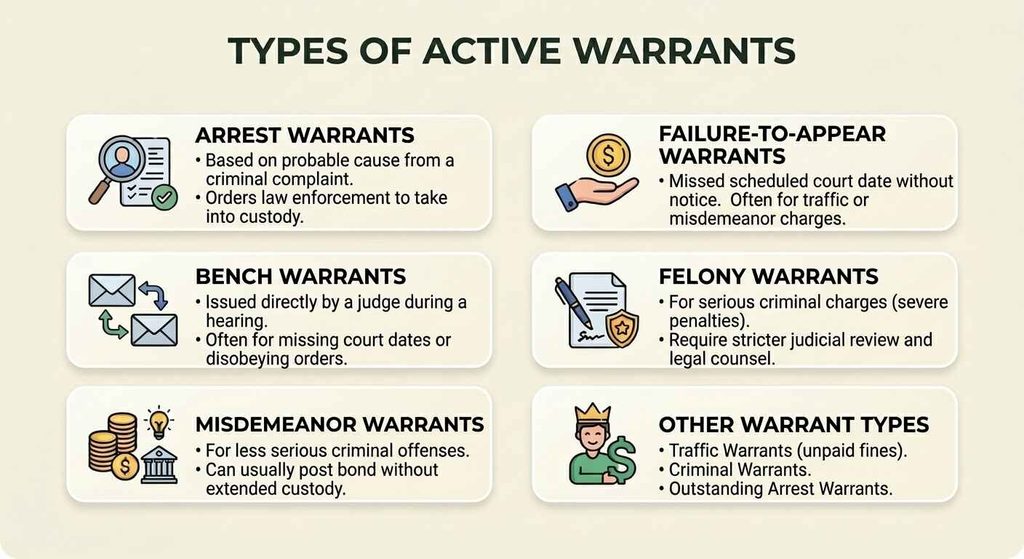
Warrants fall into several categories, each tied to a specific court action or offense class. Knowing the warrant type connected to a record helps you understand the legal weight behind the order and the resolution steps that apply. The Fairfax County portal lists the type for every active record so you can tell whether the case involves a missed court date, a criminal complaint, or a direct judicial instruction. This information shapes how you respond to the warrant and which authorities you contact for help.
Arrest Warrants
An arrest warrant orders law enforcement to take the named individual into custody based on probable cause established through a criminal complaint or police investigation. Judges issue these warrants after reviewing sworn statements and supporting evidence filed by prosecutors or police officers. Once active, an arrest warrant allows deputies to arrest the subject at any time within the court’s jurisdiction. Resolving an arrest warrant typically requires a court appearance, possible bond posting, and entry into the formal criminal case process.
Bench Warrants
A bench warrant is issued directly by a judge, usually from the bench during a hearing, often to secure the appearance of a witness, defendant, or other party who failed to comply with a court order. Unlike arrest warrants that stem from criminal complaints, bench warrants frequently arise from procedural issues such as missed court dates or ignored subpoenas. Active bench warrants give law enforcement the authority to bring the subject before the issuing judge quickly. Resolving a bench warrant usually involves appearing before the judge who issued it to explain the absence or noncompliance.
Failure-to-Appear Warrants
A failure-to-appear warrant triggers when a person misses a scheduled court date without notifying the court or requesting a postponement. These warrants often accompany underlying charges such as traffic violations, misdemeanors, or low-level felonies and act as a tool to bring the defendant back into the legal process. Courts may lift a failure-to-appear warrant once the subject appears and addresses the original charge. Resolving the warrant quickly helps reduce the risk of additional penalties or bond forfeiture on the original case.
Misdemeanor Warrants
Misdemeanor warrants stem from charges classified as less serious criminal offenses, such as petty theft, simple assault, or certain traffic violations. These warrants remain active until the subject appears in court to answer the charge or until the court recalls the order. Most misdemeanor warrants allow the subject to post bond and schedule a new hearing without remaining in custody. Local courts process these cases through the General District Court, which handles misdemeanor matters in Fairfax County.
Felony Warrants
Felony warrants arise from serious criminal charges that carry potential sentences of more than one year in prison. Issuing judges apply stricter review for these warrants because of the severity of the underlying offense. Felony warrants remain active until the subject surrenders to the court, posts bond if allowed, or the case reaches a final disposition. Because felony charges move through the Fairfax Circuit Court, subjects facing felony warrants usually need legal representation before appearing in front of a judge.
Other Warrant Types
Besides the most common categories, the warrant database includes records for traffic warrants, criminal warrants, and outstanding arrest warrants related to specific court orders. Traffic warrants usually result from unpaid fines or unresolved violations, while criminal warrants cover a broad range of offenses across state law. Some entries show as outstanding arrest warrants issued through interstate cooperation, which means another jurisdiction holds the warrant but shares it with Virginia databases. Each type requires a tailored response, which is why the warrant type field plays such a critical role in evaluating results.
Warrant Status and Case Information
Warrant status tells the legal story of each record from issuance through resolution. The Fairfax County portal lists the current status and any related case information that affects how the warrant sits within the court system. Reviewing both fields together gives you a complete picture of the order and any pending legal proceedings tied to it. The status update date also notes the most recent change, so you always know whether the record reflects the latest court action.
Active and Outstanding Warrants
Active and outstanding warrants both signal that the court expects a person to respond to legal action. A warrant marked active means the order remains in force, while outstanding tells law enforcement the subject has not yet been served or has not appeared. Both statuses allow deputies to act on the order at any time, which can lead to arrest during routine stops, court appearances, or other law enforcement contacts. Resolving these warrants quickly reduces the risk of arrest and additional penalties on the underlying case.
Recalled Warrants
A recalled warrant has been pulled back by the court or the requesting party after a review of the case. Recalls often follow new evidence, dropped charges, or administrative corrections that remove the need for enforcement. Once recalled, the warrant no longer carries the power to authorize an arrest or compel a court appearance, though the underlying case may still proceed. The warrant disposition field typically explains why the court recalled the order.
Quashed or Withdrawn Warrants
Quashed warrants result from a judge cancelling the order after hearing arguments from the defense or prosecution, often because the original probable cause failed or new facts emerged. Withdrawn warrants are pulled by the requesting party, typically a prosecutor or officer, before the warrant is served. Both statuses end enforcement immediately, but the case file may remain open for further action. Checking the warrant status update date confirms when the change took place.
Warrant-Related Case Information
Warrant-related case information links the warrant to its parent court case so you can see the broader legal picture. The case information field shows the underlying offense, court hearing schedule, and any pending legal proceedings tied to the warrant. Reviewing this field helps you understand whether other hearings or obligations attach to the case beyond the warrant itself. Court records kept by the clerk’s office provide deeper detail on the case file when you need more than the portal summary.
Warrant Status Updates
Warrant status updates record every change that affects the order, including new conditions, recall actions, or final resolution. Each update carries a date stamp so you can track the timeline of the case. These updates flow from the issuing court or authority directly into the warrant database, which means the online display reflects official action rather than third-party edits. Monitoring the most recent update date protects you from acting on stale data pulled from older printed listings.
What to Do About an Active Warrant
Finding an active warrant on the portal can feel stressful, but several clear steps help you handle the situation responsibly. The first move always involves confirming the record, since identity errors happen with common names. You can also access wanted persons to review official records. After verification, contacting the right court or authority sets the stage for resolution, and legal assistance can smooth out any complications. Acting quickly usually reduces penalties, especially for failure-to-appear warrants that may carry added fines or bond forfeitures.
Confirming Warrant Information
Confirm the warrant information before taking any step that affects your legal standing. Pull the full record from the Fairfax County portal, note the warrant number, and compare every field against any paperwork you already hold. Cross-check the offense details with court records or ask the clerk’s office to verify the data over the phone. Accurate confirmation prevents you from responding to a warrant that belongs to another person, and it ensures your attorney or the court works from the correct case file.
Contacting the Appropriate Court or Authority
After confirming the warrant, contact the issuing court or authority to ask about resolution options. The clerk’s office can explain whether the court allows a walk-in appearance, a scheduled hearing, or a bond posting for the warrant type on file. Calling during business hours, which run Monday through Friday from 8:00 AM to 4:00 PM, gives you direct access to staff who handle these records daily. Keep the warrant number ready, as the clerk uses that identifier to pull the file quickly.
Resolving a Failure-to-Appear Warrant
Resolving a failure-to-appear warrant usually means appearing before the judge who issued it as soon as possible. Bring valid identification, any paperwork related to the original case, and proof of address so the court can update its records. In many situations, the judge recalls the warrant during the same appearance and reschedules the underlying case. Acting quickly on a failure-to-appear warrant reduces the risk of additional charges, suspended licenses, or bond forfeiture on the original offense.
Legal Assistance and Court Procedures
Legal assistance from a licensed attorney familiar with Fairfax County court procedures makes the resolution process smoother. Attorneys can appear on your behalf for certain procedural matters, file motions to recall warrants, and negotiate bond conditions with the prosecutor. Court procedures vary by warrant type, so a lawyer can explain what to expect during your hearing and help you prepare documents or testimony. Even a brief consultation often uncovers options you may not see when handling the case alone, especially when felony or interstate warrants are involved.
Warrant Records That Are Unavailable
Some warrant records never appear in the online search results, which can cause confusion when you cannot find an entry you expected. Understanding the common reasons behind missing records helps you adjust your search and avoid drawing the wrong conclusion. Warrant database updates, sealed restrictions, and incomplete search details all play a role in what shows up on the portal. When a record stays out of reach, the next step involves contacting the issuing court or sheriff’s office directly for assistance.
Recently Issued Warrants
Recently issued warrants may not show up immediately because the warrant database updates on a regular schedule rather than in real time. A new warrant might take a short period to move from the court system into the online search portal, especially when issued late in the business day. If the warrant you expect to find carries an issue date within the last few days, waiting and rechecking the portal after the next update cycle often brings the record into view. If the entry still does not appear, the issuing court can confirm whether the warrant exists.
Sealed or Restricted Records
Sealed or restricted records stay out of public warrant records by court order to protect sensitive cases, juvenile matters, or ongoing investigations. These restrictions prevent the online portal from showing sealed entries, even when the warrant remains active. The clerk’s office can confirm whether a sealed record exists but cannot share the contents without a court order. Restricted records follow the same rule, so legal channels become the only path to the underlying data.
Incorrect or Incomplete Search Details
Incorrect or incomplete search details often cause records to stay out of the results page. Misspelled names, wrong date formats, or missing case numbers lead the system to skip matching entries. Double-check spelling, especially for compound surnames, and try alternate spellings if the first attempt returns nothing. Adding available details, such as date of birth or jurisdiction, narrows the search and reduces the chance of a missed match.
Delays in Warrant Status Updates
Delays in warrant status updates mean a record you found yesterday may carry an outdated status today, and a new record may take time to surface online. The warrant database updates cycle depends on how quickly the issuing court logs changes, processes recalls, or enters new warrants into the system. Court staffing, holiday closures, and the volume of new cases all affect update speed. When timing matters, a direct call to the clerk’s office clears up whether the latest changes have hit the portal yet.
Contact Information
You can reach the Fairfax County Sheriff’s Office during business hours to ask follow-up questions about warrant records, case numbers, or status updates. Staff can verify entries that the online portal does not display and can guide you to the right clerk’s office when cases fall outside their jurisdiction. The office sits at 10520 Judicial Drive, Fairfax, VA 22030, with phones answered Monday through Friday from 8:00 AM to 4:00 PM. Direct lines include (703) 246-2100 and (703) 246-3227 for warrant-related questions.
Frequently Asked Questions
Below are concise answers to common questions about finding and understanding active warrants in Fairfax County.
How can I search active warrants in Fairfax?
Visit the Fairfax County Sheriff’s online portal at the official website link. Choose the warrant search option and enter the subject’s full name, case number, or reference number. The system pulls data directly from the court’s warrant database, showing current warrant status, issue date, and type. Results update automatically, so you see the same information deputies use. If you need help, call the sheriff’s office during business hours.
Can I look up a warrant by name online?
Yes. The online portal allows a name‑based search. Type the exact first and last name of the person you are checking. The search returns any active or outstanding warrants linked to that name, including details such as warrant type, issuing court, and case number. If multiple matches appear, review each record to confirm the correct individual. For privacy reasons, sealed or restricted records will not display.
What info appears in a warrant record?
A warrant record lists the warrant number, issue date, and current status. It also shows the type of warrant—arrest, bench, or traffic—and the issuing court or authority. The subject’s name, case number, and a brief description of the alleged offense are included. Some records note conditions, such as surrender requirements, and any updates to the warrant’s status. This information helps individuals understand why the warrant was issued and what steps may be required.
Why might an active warrant not show online?
Not all warrants appear in the public database. Recent warrants may still be processing and not yet entered. Warrants that are sealed, under investigation, or issued by a federal agency are excluded for security reasons. Errors in the entered name or case number can also prevent a match. If you suspect a warrant exists but cannot find it online, contact the sheriff’s office directly for verification.
How often are Fairfax warrant records updated?
The sheriff’s office updates the online warrant database daily. New warrants entered by the courts appear within 24 hours, and status changes—such as cancellations or fulfillments—are reflected the same day. However, occasional delays may occur during high‑volume periods or system maintenance. For the most current information, use the portal regularly or call the office during normal hours.